Your website is being graded for AI agents, not just humans
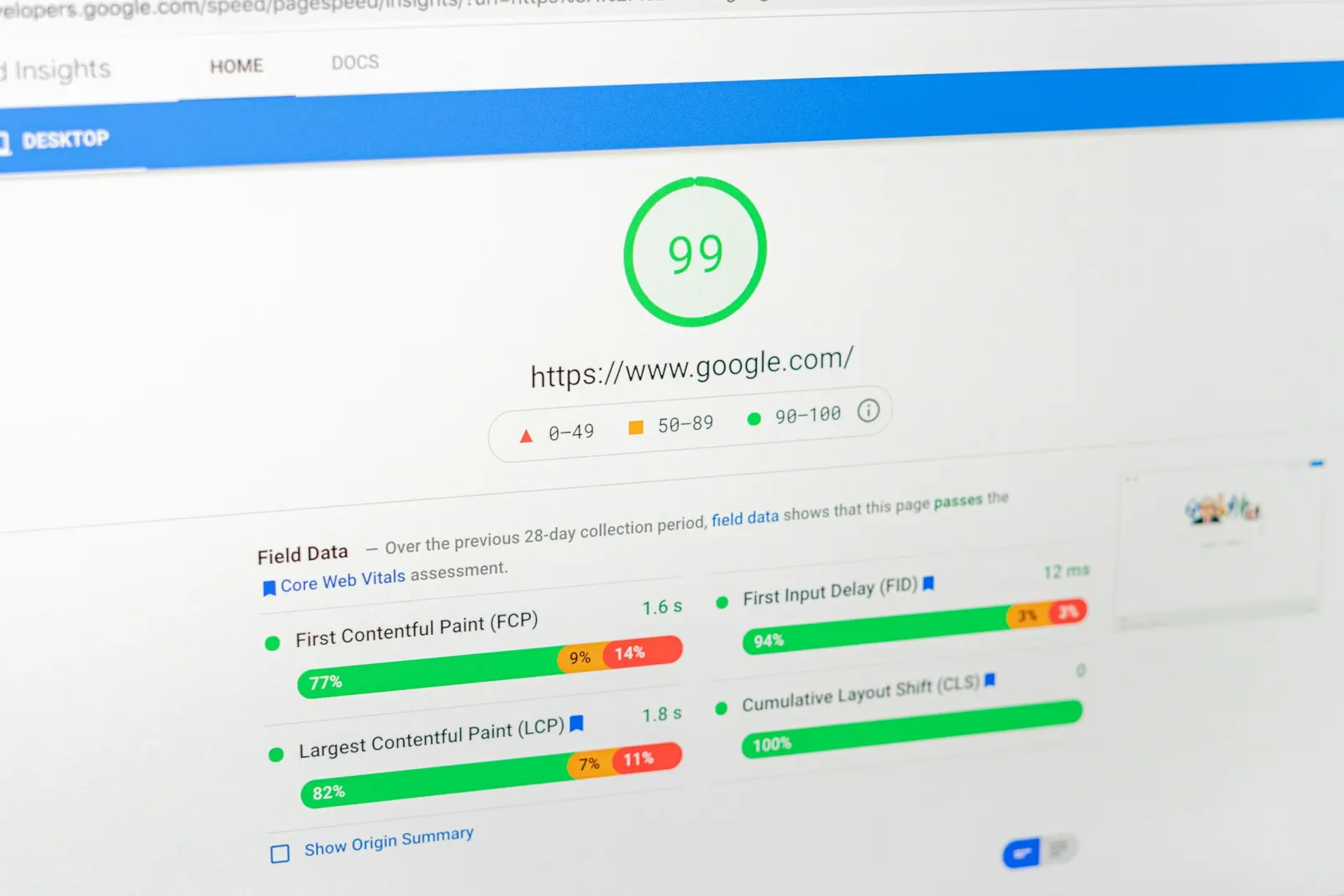
For more than a decade, the score that mattered was speed. You ran your site through PageSpeed Insights, watched the dials, and chased a green number that stood in for one question: does this page feel fast to a human? That question has not gone away. But a second one has quietly appeared beside it, and it is not about humans at all.
Google’s Lighthouse, the auditing engine behind PageSpeed Insights, has added a new category called Agentic Browsing. It sits next to Performance, Accessibility, Best Practices and SEO, and it scores something none of those touch: how easily an AI agent can read, understand and act on your page. The web is no longer browsed only by people. It is increasingly read by machines acting on their behalf, and Google has started grading you on how well you serve them.

What is Lighthouse’s Agentic Browsing category?
Lighthouse is the open-source audit that powers PageSpeed Insights, the Chrome DevTools Lighthouse panel and a long list of monitoring tools. When Lighthouse adds a category, it eventually shows up wherever Lighthouse runs, which is why a change in the engine becomes a change in the report millions of people check.
The Agentic Browsing category was introduced in the Lighthouse 13 series and added to the default configuration, which is the moment a niche experiment becomes a standard part of the report. Because PageSpeed Insights runs Lighthouse, the audits flow through to pagespeed.web.dev; we have seen them reported at Lighthouse 13.4.0.
Two caveats matter, and we say them plainly. First, the category is explicitly under development and subject to change, so treat it as a strong signal of direction rather than a finished standard. Second, it does not produce a single weighted 0–100 score like Performance does. It reports the applicable checks that pass, which is why our own site shows a tidy “3/3” rather than a percentage. The point, for now, is the signal, not the leaderboard.
What does the Agentic Browsing category actually check?
Underneath the headline number are a handful of concrete audits, each tied to a question an agent has to answer before it can use your site.

- A well-formed accessibility tree. The accessibility tree is the structured, machine-readable model of your page that assistive technology already relies on. A clean tree, built from semantic HTML with correct roles, is what lets an agent navigate and interact with the page instead of guessing from raw markup. The work you do for screen-reader users turns out to be the work you do for AI agents.
- WebMCP integration. WebMCP is an emerging standard for exposing a site’s actions to agents safely: annotating forms and registering agent-usable “tools” so an assistant can actually complete a task. On a content site these checks read “not applicable” — more on that below — but on a transactional site they are the difference between an agent that can book, apply or buy and one that stalls.
- An llms.txt that follows recommendations. An llms.txt file is a short Markdown document at your site root that tells AI systems how to read and use your content. Lighthouse checks that it exists and follows the guidance: a Markdown file with at least one H1 header, sufficient length, and clear links.
- Layout stability (Cumulative Layout Shift). The same Cumulative Layout Shift metric that punishes a page where buttons jump around for a human also breaks an agent mid-task. If the element it was about to click moves, the interaction fails. CLS is no longer just a comfort metric; it is a stability requirement for automated flows.

Why does this matter now?
Because the audience has changed. People increasingly ask an assistant a question instead of opening ten tabs, and those assistants are starting to do more than summarise — they browse, navigate and act. Your site now has two kinds of visitor with different needs, and only one of them has eyes.
This is the same shift we have written about under the headings of generative engine optimisation and answer engine optimisation: the goal has moved from ranking in a list of links to being read, understood and cited by machines. What is new here is that Google has put a number on part of it, inside the tool your developers already open every week. The difference between SEO and GEO used to be an argument you had to make. Now there is a category in PageSpeed Insights making it for you.
What does an “AI-ready” website actually look like?
The reassuring part is that there is very little new to learn. An AI-ready site is, mostly, a well-built site whose quality is now being measured from a second angle:
- Semantic, accessible HTML so the accessibility tree is clean and an agent can parse your structure.
- A stable layout with low Cumulative Layout Shift, so nothing moves under an agent mid-interaction.
- A well-formed llms.txt that states, in plain Markdown, who you are and how your content should be used.
- WebMCP-annotated actions where your site asks visitors to do something — book, apply, join, contact — so an agent can complete the task rather than abandon it.
None of these are exotic. They are the things good engineering does anyway, which is exactly why the Agentic Browsing category is less a new burden than a new scoreboard for work that was always worth doing.
A worked example: our own site
We ran our own site through PageSpeed Insights and the Agentic Browsing category returns 3/3 on the applicable checks: the accessibility tree is well-formed, Cumulative Layout Shift sits at 0.038, and our llms.txt follows the recommendations. Alongside it, Performance, Accessibility, Best Practices and SEO score 95, 97, 100 and 100.
Here is the honest nuance, because it is the most useful part. That “3/3” covers the checks that apply to us; the three WebMCP audits read “not applicable”. That is correct, not a gap to paper over: this is a content and marketing site, not a transactional one, so there are no agent-callable forms to annotate. On a membership portal or a booking system, those same WebMCP checks would be live and very much worth passing. Knowing which signals apply to your site is half the work.
# Morris McLane

> The digital arm of high-stakes communications. Digital strategy and execution for crisis and litigation response, digital advocacy, reputation management and AI search visibility.

Morris McLane is a London-based firm serving the United Kingdom and the United States.

## Services

- [AI Search Visibility](/services/ai-search-visibility): Be the source AI cites — ChatGPT, Perplexity, Claude, Gemini, Google AI Overviews.
- [Managed AI-Ready Websites](/services/association-website-design): Built to be found and cited by AI.

## Contact

- Email: [email protected]We did not chase this score. The result is a by-product of building the site the way we build them: structured, fast, accessible, and legible to machines from day one.
How Morris McLane approaches this
This is the brief behind our Managed AI-Ready Websites service: sites built to be found and cited by AI, not retrofitted for it later. The foundations the Agentic Browsing category rewards — semantic structure, a clean accessibility tree, a disciplined llms.txt, layout that holds still, and structured data an agent can trust — are baked in, not bolted on. You can see how an AI-ready site is built, including the structured-data specimens and the limits stated plainly.
The same foundations feed everything else we do in AI search visibility: a site a machine can read cleanly is a site a machine is more comfortable citing. Passing an audit is the floor, not the goal. The goal is being the source an assistant reaches for.
The short version
Lighthouse, and therefore PageSpeed Insights, now grades your site for AI agents as well as humans, through a new Agentic Browsing category. It checks a small, sensible set of signals — a clean accessibility tree, WebMCP where it applies, a well-formed llms.txt and a stable layout — and reports the applicable ones that pass. It is early and still under development, but the direction is unambiguous: machine readability is now a measured property of your website.
If you want a site that is built to pass this audit and, more importantly, to be read and cited by the assistants your audience now asks, that is precisely what our Managed AI-Ready Websites service is for.
Frequently asked questions
What is agentic browsing?
Agentic browsing is when a software agent, such as an AI assistant or an automated tool, programmatically discovers, reads and acts on a web page, rather than a human scrolling and tapping. Lighthouse's Agentic Browsing category scores how ready your page is for that kind of visitor: whether an agent can understand your structure, find your actions and complete a task without guessing.
Is Agentic Browsing in Google PageSpeed Insights yet?
Yes. It arrived as a new Lighthouse category, and because PageSpeed Insights runs Lighthouse, the audits now surface there too. We have seen it reported at Lighthouse 13.4.0 in mid-2026. It is still marked 'under development', so the exact checks and the way they are scored may change.
What does the Agentic Browsing category check?
Four signals: a well-formed accessibility tree, WebMCP integration (annotated forms and registered agent tools), an llms.txt file that follows recommendations, and layout stability measured by Cumulative Layout Shift. It reports the applicable checks that pass rather than a single 0–100 score.
What is WebMCP?
WebMCP is an emerging way to expose a site's actions to AI agents safely: annotating forms and registering agent-usable 'tools' so an assistant can complete a task on your behalf. On a content or marketing site these checks read 'not applicable'; they matter most for transactional, booking or membership sites where agents need to do something, not just read.
Do I need an llms.txt file?
It is one of the signals Agentic Browsing checks. An llms.txt is a short Markdown file at your site root that tells AI systems how to read and use your content; it should contain at least one H1 and clear links. It is quick to add, and increasingly worth having.
How do I make my website AI-ready?
Start with semantic HTML and a clean accessibility tree, keep layout stable (low Cumulative Layout Shift), publish a well-formed llms.txt, and — for transactional sites — annotate your actions with WebMCP. These are the same foundations our Managed AI-Ready Websites service is built on.