Web Design for Washington DC Trade Associations, Coalitions and Nonprofits: What Actually Matters
For a Washington DC trade association, coalition or nonprofit, the website’s job is narrow and high-stakes: be the credible public record that a journalist, a congressional staffer, a regulator — or the AI assistant they now ask — finds and trusts on your issue. That puts the priorities in a different order than a typical business site. What actually matters is institutional credibility, machine-readability, a small attack surface and a clean exit — not a fashionable template or a local agency’s address. Here is what to weigh, and why the nearest map-pack web shop is not automatically the right partner.
What actually matters (and what doesn’t)
Four things decide whether a DC association or coalition site does its job:
- Institutional credibility. The site has to look as serious as the organisation behind it. Document-first design — a clear mandate, the members or board up front, filings one click away — signals authority to the people who decide. Visual gimmickry reads as the opposite.
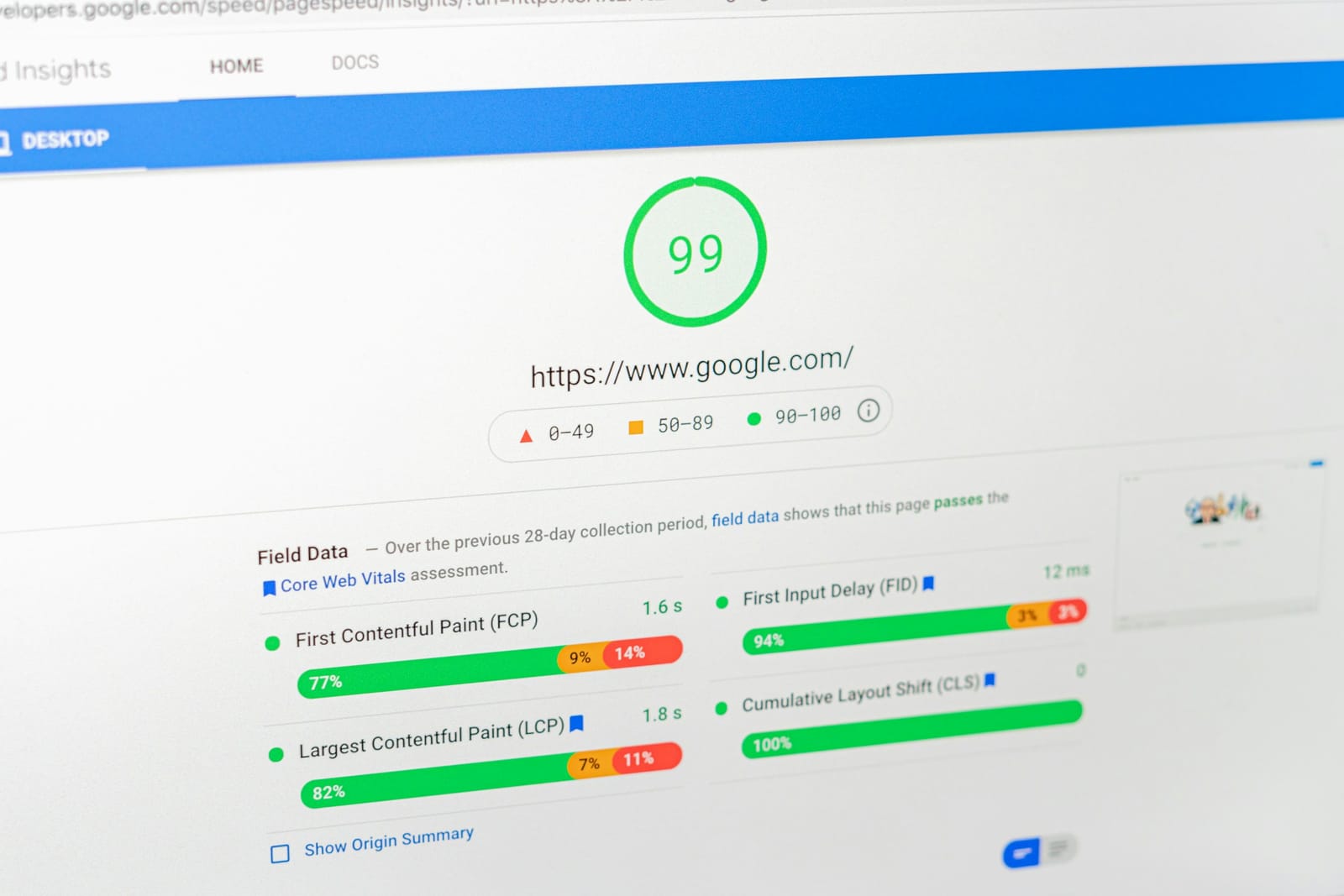
- Machine-readability. When someone asks ChatGPT, Perplexity or Google’s AI Overviews about your issue, the engines answer from sources they can parse and trust. Fast, server-rendered pages with clean structured data are easy to read and cite; slow, script-heavy themes that bury the substance are not.
- A small attack surface. A site that can be defaced or taken down during a hearing or a ruling is a credibility risk, not just an IT one. The fewer moving parts on the public site — no database, no plugins, no admin login — the less there is to attack.
- A clean exit. Your domain and content should stay yours, and the site should be portable, so you are never held hostage by a platform or an agency at the end.
Notice what is not on that list: a trend-driven design, a heavy CMS, a members’ portal you will rarely use, or a local address. Those are where association web budgets most often leak.
Why the nearest DC agency isn’t automatically the right partner
It is natural to assume a Washington DC association needs a Washington DC web designer. For most of what matters now, that assumption is wrong.
A local agency helps if you specifically need in-person production, or you are deliberately chasing the local map pack — the map-and-listings block for searches like “web design company near me.” But that is a different game from the one a serious association is actually playing. Whether your organisation is found and trusted on your issue — in search and, increasingly, inside AI answers — is decided by authority and machine-readability, not by your web team’s postcode. A coalition contesting a trade-remedy case is not trying to rank in a local map pack; it is trying to be the source an engine cites when the issue is searched.
So the honest filter is not “who is nearest?” but “who understands institutional credibility, security and AI search?” That partner might be down the street or across an ocean. We make this case about ourselves, too: as a London-based firm, we do not chase the DC map pack — we build for the authority and citability that actually decide the outcome.
Coalition vs standing association: same build, different lifecycle
The underlying build is the same; the lifecycle differs.
A coalition site is usually organised around a specific fight and a defined lifespan. It needs to stand up credibly and quickly, carry the member companies and the filings, hold presence while the matter is live, and then hand over or wind down cleanly when it resolves. Publishing often runs through a sign-off step, because several parties — members’ counsel, a lead firm, a board — have to approve what goes public.
A standing association site is permanent and membership-focused, with a steadier publishing rhythm. The components — mission, members, newsroom, contact — are largely the same; what changes is who controls publishing and whether there is an end date.
Either way, the right architecture is small, fast, document-first and portable. We go deeper on the engineering in how an AI-ready site works.
A short checklist for choosing a partner
Before you commit, ask any prospective partner:
- Will the public site be fast and server-rendered, with clean structured data the engines can read?
- What is the attack surface — is there a database, plugins and an admin login on the public site, or not?
- Who controls publishing, and is there a sign-off step when several parties must approve?
- What is the ongoing cost and effort to keep it secure and current?
- At the end, what do we keep — the domain, the content, the ability to move it?
If a prospective partner cannot answer those plainly, that is itself an answer.
The bottom line
A Washington DC trade association, coalition or nonprofit does not need the flashiest site or the nearest agency. It needs a credible, fast, machine-readable site with little to attack and a clean way out — built by a partner who understands that authority and AI-readability, not a local address, decide whether your side is the one that gets found and quoted. Get those priorities right and a small, serious site will do more for you than a large, fragile one ever could.
This is the companion to WordPress website management for a DC trade association and why discoverability is the barrier to trade association growth. For how we build and run these sites, see Managed AI-Ready Websites.
Frequently asked questions
What should a Washington DC trade association look for in a website?
Four things matter more than a fashionable design: institutional credibility (it has to look as serious as the organisation), machine-readability (so search engines and AI assistants can find and cite you), a small attack surface (so it cannot be easily defaced or taken down during a scrutiny moment), and a clean exit (your domain and content stay yours). A small, fast, document-first site that does those four things will outperform a heavier, prettier one that does not.
Do we need a local DC web design agency?
Not necessarily, and for the work that actually moves the needle in 2026, location is largely irrelevant. A DC address helps if you specifically need in-person production or you are chasing the local map pack. But whether a journalist, a staffer or an AI assistant finds and trusts your association on your issue is decided by authority and machine-readability, not by your web team's zip code. Choose the partner who understands credibility and AI search, wherever they sit.
How is a coalition website different from a trade association site?
A coalition site is usually built around a specific fight (a tariff case, a rule, a piece of legislation) and a defined lifespan, so it needs to stand up credibly and fast, carry the member companies and the filings, and then hand over or wind down cleanly when the matter resolves. A standing association site is permanent and membership-focused. The underlying build is the same; the difference is the lifecycle and who signs off on what goes public.
How do we make a DC association or coalition findable in AI search?
Be the source an engine can read and trust: answer-first content on the exact questions members and policymakers ask, a consistent entity footprint across your site and the reference sources models lean on, clean structured data, and authoritative third-party references on the issues you own. The platform makes you eligible to be cited; authority decides whether you are. We cover this in depth in our piece on trade-association discoverability.
What does a credible coalition site need on day one?
Less than most people assume. Typically a clear mission, the member companies or people behind it, the founding filing or statement, a newsroom for updates and a contact route — usually one to five pages. The design should be institutional and document-first: the mandate up front, every filing one obvious click away, readable on a phone outside a hearing room. No member portal or learning system unless you will genuinely use it.
Can the website be handed over when a campaign ends?
It should be. A well-built coalition site is portable by design: your domain stays registered to you, the content is yours, and the whole site can be transferred or wound down cleanly when the matter resolves. Ask any prospective partner exactly what you keep and what happens at the end before you start, not after.